Direction ≠ goals ≠ strategy
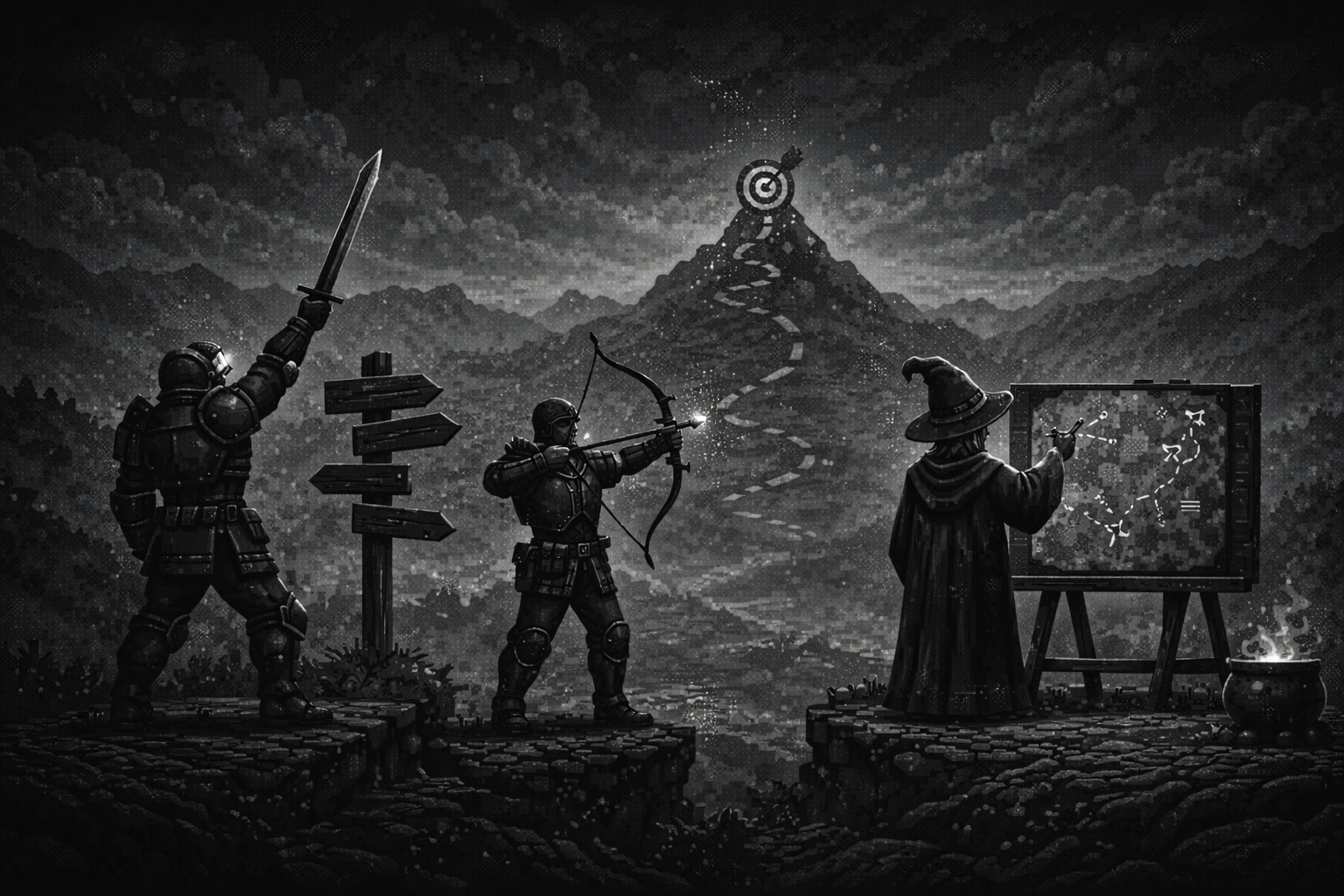
A common mistake in leadership and planning is to treat direction, goals, and strategy as interchangeable. In reality, these are distinct concepts that build on one another. Blurring the lines between them creates confusion, misaligned priorities, and wasted energy. Clarifying the differences is essential to setting teams up for success.
Direction — “deciding where to place a dot on the horizon”
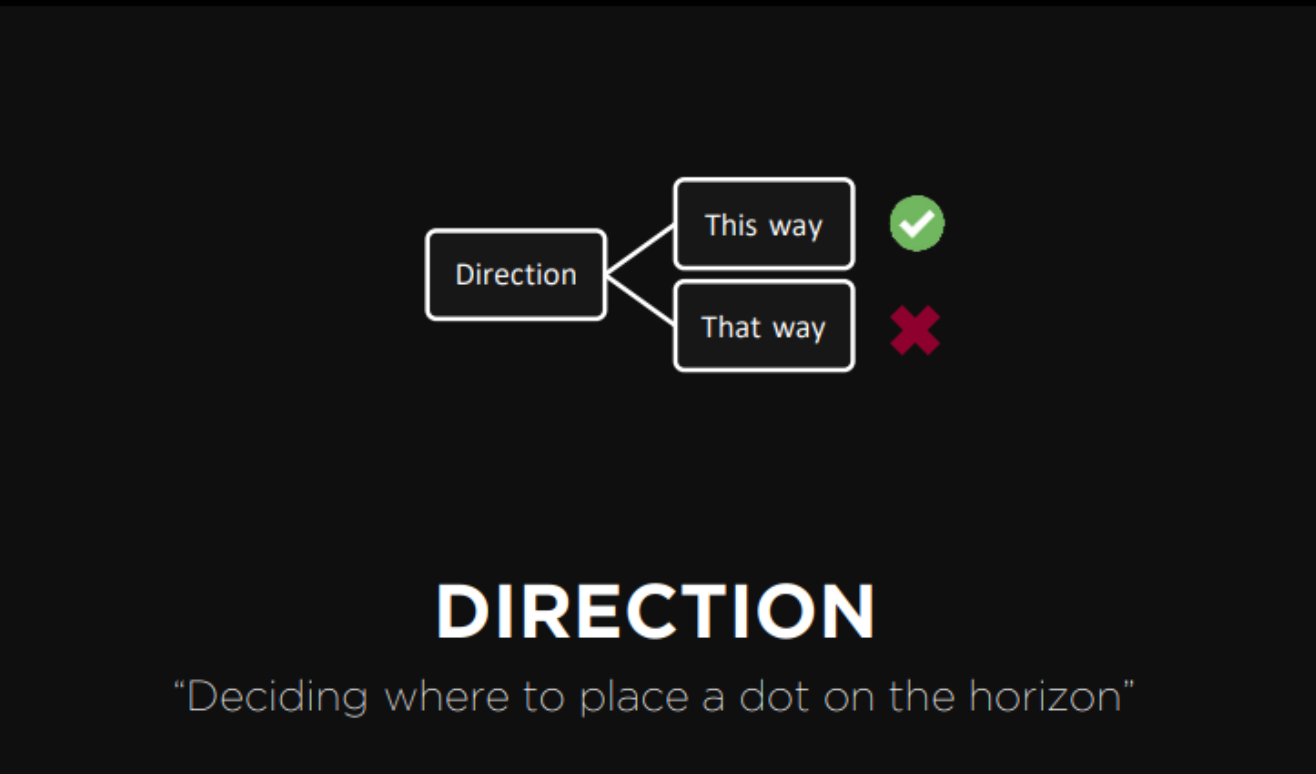
Direction is about orientation, not execution. It is the act of choosing a point on the horizon — a destination, a place where the team and its collective talents should aim. At this stage, no roadmap, milestones, or problem-solving is involved. It is a simple decision of this way, not that way.
Direction establishes the broad arc of energy and attention. Without it, teams risk scattering efforts across too many fronts, or worse, moving forward without any shared understanding of where they are heading.
Goal setting — “building a map to the dot on the horizon”
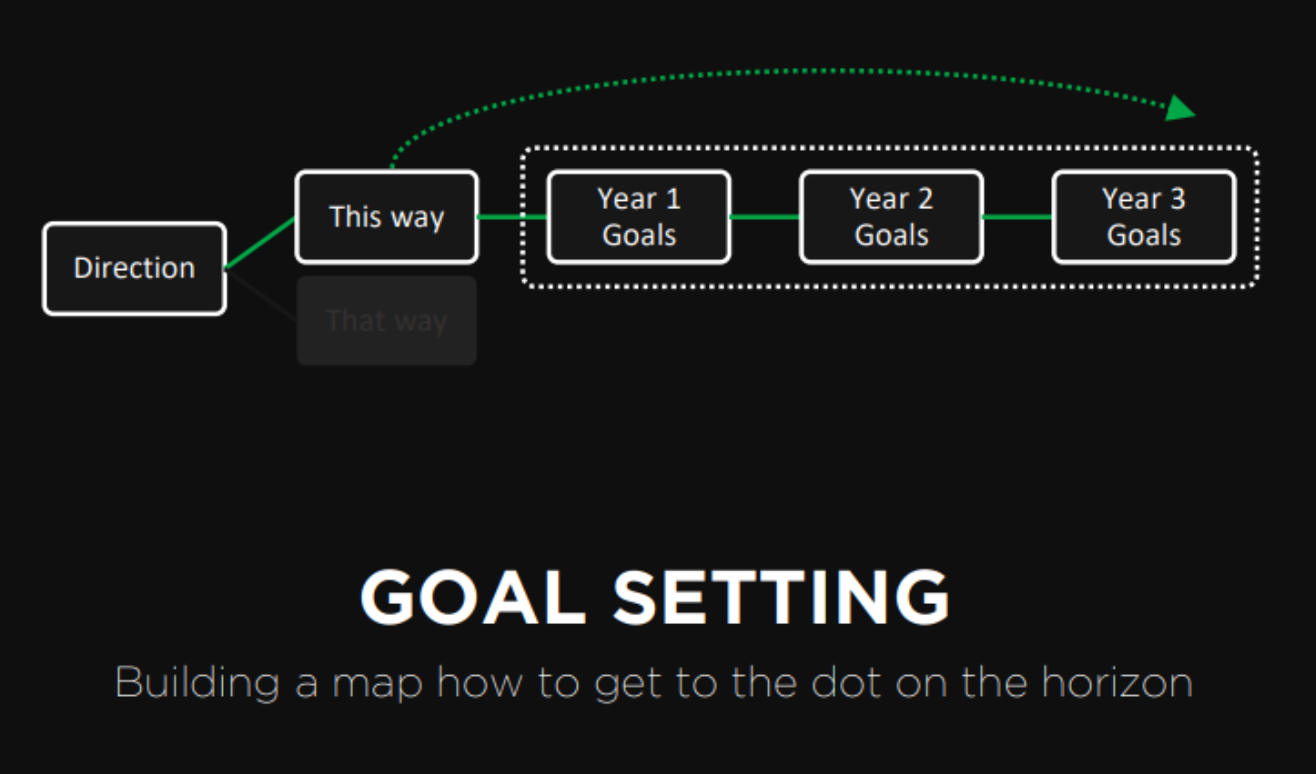
Once direction is chosen, goals provide structure by breaking the journey into measurable waypoints. Goal setting is about projecting key milestones that help map the path toward the horizon.
This map should not be seen as rigid or permanent. Instead, it is a projection — an outline of possible checkpoints along the way, acknowledging that circumstances will evolve and adjustments will be necessary. Goals transform direction into something tangible by articulating what progress looks like over time, usually in year-by-year increments.
Strategy and execution — “diagnosing problems in order to apply solutions”
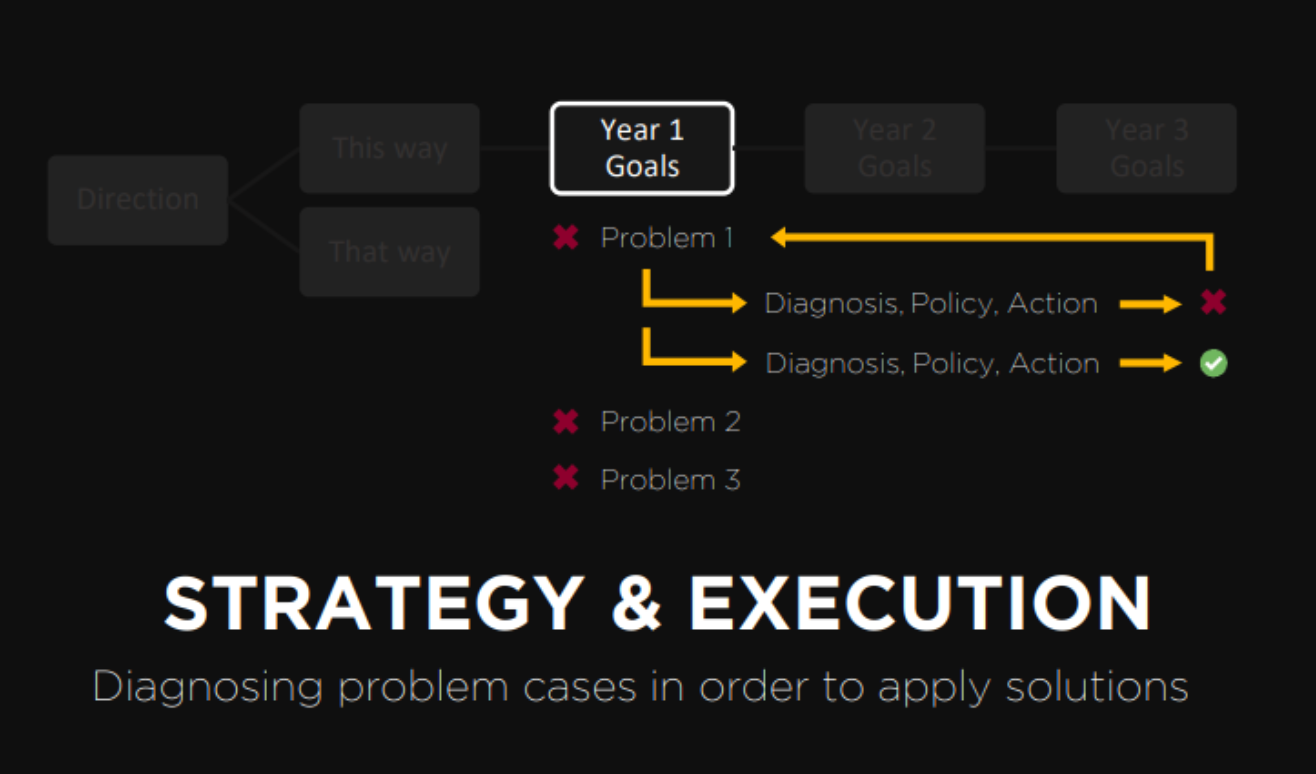
Strategy comes later. Where direction and goals define where we want to go and how we might measure progress, strategy is about how to actually win. Effective strategy requires diagnosing the problems standing in the way, then crafting coherent policies and actions to overcome them.
Following the principles in Good Strategy / Bad Strategy, good strategies are built on clear problem diagnosis, not vague aspirations. Execution flows naturally from these diagnoses, translating into specific actions to be taken, with accountability and follow-through.
This distinction matters — without diagnosis, teams risk leaping into action with no clarity on whether they are solving the right problems.
The discipline of separation
In practice, many planning sessions collapse these three stages into one, leading to confusion. Leaders talk about direction as if it were strategy, or they define goals without ever agreeing on a true north. By separating the concepts, teams gain clarity:
- Direction — choose the horizon
- Goals — plot the milestones
- Strategy and execution — diagnose problems and act
This creates a disciplined foundation for collective intelligence to be applied later, once the path is clear.